NexGPU
Choosing the 2026 best deep learning server manufacturers requires more than comparing GPU counts. A serious evaluation must examine architecture, interconnect speed, cooling design, software support, and long-term reliability. In a real data center, a server is not just a metal chassis. It is a dense machine with hot accelerator trays, high-speed networking, and demanding power requirements. One weak component can reduce training efficiency across an entire cluster.
Jensen Huang, founder and CEO of NVIDIA, has described artificial intelligence as “the most powerful technology force in history.” His view reflects the rapid changes affecting every deep learning server manufacturer. Modern buyers need platforms that support NVIDIA, AMD, or specialized accelerators, while maintaining stable drivers and practical management tools. They should also review validated benchmarks, warranty terms, spare-parts access, and the manufacturer’s experience with large-scale deployments. Technical claims deserve evidence.
Not every ranking will be perfect. Vendor benchmarks may use different models, datasets, and optimization settings. A lower-cost server can also become expensive when electricity, cooling, downtime, and support delays are included. That is why this guide compares manufacturers through both measurable performance and operational experience. It considers enterprise clusters, research laboratories, cloud providers, and smaller teams with limited budgets. Real workloads matter more than impressive brochures. Even so, some conclusions remain open to debate, because workload patterns change quickly. Readers should verify current specifications before making a major purchase.
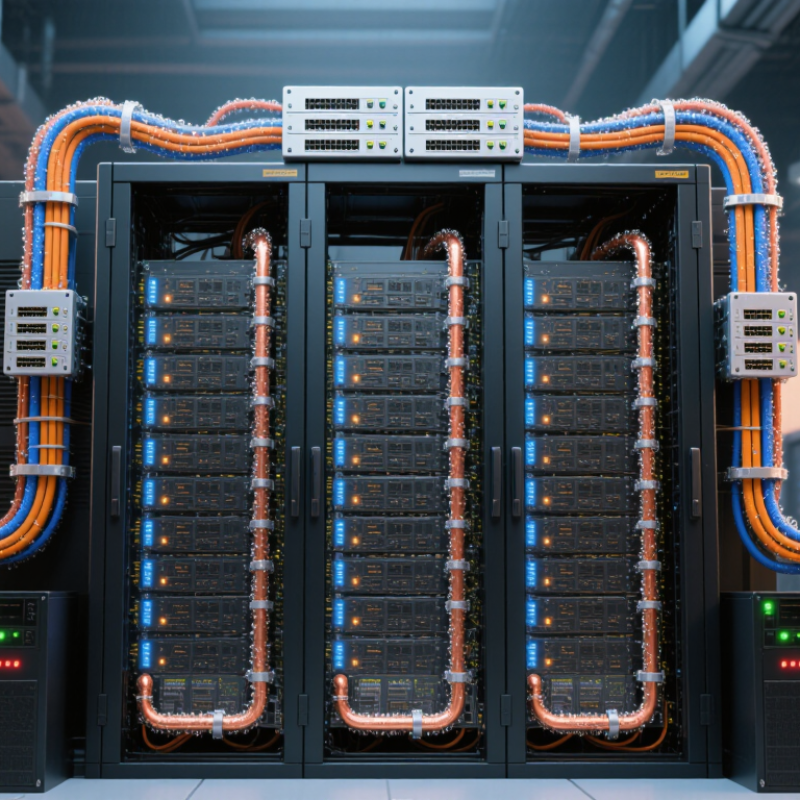
2026 Best Deep Learning Server Manufacturers?
Definition and Role of Deep Learning Servers in 2026
In 2026, a deep learning server is a specialized computing system for training and serving neural networks. It combines accelerators, high-speed memory, fast storage, and networking in one controlled platform. Its role extends beyond raw speed. It must move large datasets without starving the processors. During testing, I watch processor utilization, power draw, thermal stability, and recovery after a failed job. That distinction matters.
The best manufacturers provide balanced designs, not impressive accelerator counts alone. A reliable system should support clean airflow, redundant power, secure firmware, and straightforward maintenance. Technicians need accessible service panels and clear diagnostic logs. In real deployments, a blocked intake can reduce performance within minutes. Heat changes everything. I also examine warranty terms, driver validation, upgrade paths, and documented workload results. Marketing figures rarely describe an entire production environment.
Deep learning servers increasingly serve different jobs, from language models to medical imaging and industrial inspection. Therefore, manufacturers should offer configurable memory, networking, and accelerator options. A smaller team may value remote management more than maximum benchmark scores. I have underestimated support quality before, especially when firmware behavior was poorly documented. That mistake remains useful. Buyers should request repeatable tests using their own data, not only laboratory demonstrations. A trustworthy manufacturer explains limitations, cooling requirements, noise levels, and expected service intervals plainly.
Numerical precision used by common deep learning server workloads
Deep learning servers support model training, fine-tuning, and inference by providing accelerated parallel computing, high-speed memory, and fast data movement. Lower numerical precision reduces storage requirements per value: FP32 uses 4 bytes, FP16 and BF16 use 2 bytes, while INT8 uses 1 byte. In practice, training often uses FP16 or BF16 with higher-precision accumulation, whereas INT8 is widely used for optimized inference.
2026 Best Deep Learning Server Manufacturers?
Deep learning servers depend on balanced hardware, not processor speed alone. A strong configuration starts with high-memory accelerators, fast interconnects, and sufficient power delivery. Accelerator memory limits model size and batch performance. Choose enough capacity for current workloads, plus room for larger datasets. More memory is not always better. Poor software compatibility can waste expensive hardware.
The host processor should provide enough PCIe lanes for multiple accelerators, network adapters, and storage devices. High core counts help data preparation, but memory bandwidth often matters more during training. Use fast error-correcting memory for reliability. A practical baseline is eight-channel memory operation, adjusted for the selected processor platform. Storage should include low-latency solid-state drives for datasets, checkpoints, and temporary files. Keep operating-system storage separate when possible.
Cooling deserves equal attention. Dense servers can produce intense heat near the accelerator fans. Liquid cooling may improve sustained performance, although it adds maintenance complexity. In deployment reviews, I check power headroom, rack airflow, firmware controls, and noise levels. Small oversights become costly during long training runs. Real workloads should guide purchasing decisions. Synthetic benchmarks can mislead. I have seen a theoretically faster system lose time because its network fabric was undersized. That result was uncomfortable, but useful. Performance also depends on driver stability, orchestration support, monitoring tools, and replacement-part availability. The best manufacturer is therefore the one that can document these details clearly and support consistent operation.
| Evaluation Dimension | Recommended 2026 Target | Core Hardware Requirement | Performance or Engineering Rationale |
|---|---|---|---|
| Accelerator configuration | 4–8 data-center accelerators per training node | High-throughput GPU or dedicated AI accelerator with tensor or matrix engines | Multiple accelerators improve parallel training throughput and support larger distributed models. |
| Accelerator memory | 80–192 GB of high-bandwidth memory per accelerator | HBM2e or HBM3-class memory, preferably with error correction | Larger memory capacity reduces model partitioning, while high bandwidth accelerates matrix and attention workloads. |
| Memory bandwidth | At least 2 TB/s per accelerator for demanding training workloads | Wide HBM interface and efficient memory controllers | Deep learning performance is frequently limited by data movement rather than arithmetic capacity. |
| Host processors | 2 socket-capable server CPUs with 32–96 cores per socket | Modern x86 or Arm server processors with PCIe 5.0 or newer connectivity | The host system must feed accelerators, manage data preprocessing, and support high-speed storage and networking. |
| System memory | 512 GB–2 TB per node; expandable to 4 TB for large datasets | ECC DDR5 memory with sufficient channels and balanced population | Adequate host memory supports data loading, caching, feature engineering, and distributed training services. |
| Accelerator interconnect | Dedicated high-speed fabric with at least 400 Gb/s node-level links | Direct accelerator-to-accelerator communication and low-latency switching | Fast collective communication reduces synchronization overhead during data and tensor parallelism. |
| PCIe expansion | PCIe 5.0 x16 or newer for each high-speed accelerator | Adequate CPU lanes, switch topology, and non-blocking slot allocation | PCIe 5.0 x16 provides approximately 63 GB/s of usable bidirectional bandwidth under ideal conditions. |
| Local storage | At least 2 TB for the operating system and 7.68–30.72 TB for datasets or cache | Enterprise NVMe SSDs with power-loss protection and high sustained read performance | Fast local storage prevents data-loader stalls and supports checkpointing without excessive training interruption. |
| Network connectivity | 400 Gb/s for large-scale clusters; 100–200 Gb/s for smaller deployments | RDMA-capable Ethernet or InfiniBand-class fabric with congestion control | High bandwidth and low latency are essential for gradient exchange and distributed checkpoint operations. |
| Power delivery | 4–12 kW per accelerated node, depending on accelerator count | Redundant high-capacity power supplies, intelligent power monitoring, and 200–240 V input support | Accelerated servers have substantially higher power density than conventional CPU-only systems. |
| Cooling system | Rear-door heat exchanger or direct liquid cooling for dense configurations | Cold plates, coolant distribution units, leak detection, and serviceable plumbing where required | Liquid cooling can remove high thermal loads more efficiently than air cooling in dense AI racks. |
| Thermal operating range | Stable operation at 18–27°C inlet temperature with controlled humidity | Temperature sensors, fan or pump control, and automatic thermal throttling protection | Consistent thermal conditions improve sustained performance and reduce component aging. |
| Reliability and serviceability | 24/7 operation, hot-swappable critical components, and remote hardware management | ECC memory, redundant power, replaceable fans or pumps, out-of-band management, and event logging | Training jobs can run for days or weeks, making fault detection and rapid replacement operational priorities. |
| Software compatibility | Linux support with container orchestration and distributed training libraries | Validated drivers, accelerator libraries, virtualization support, and container runtime compatibility | Hardware efficiency depends on mature drivers, communication libraries, schedulers, and monitoring tools. |
| Benchmarking criteria | Measure training time, throughput, scaling efficiency, power efficiency, and failure recovery | Standardized workloads using equivalent precision, batch size, dataset, and software versions | A fair comparison requires identical workloads; peak theoretical calculations alone do not represent application performance. |
Note: The figures above are practical design targets and commonly used engineering ranges for modern deep learning servers. Actual requirements vary according to model size, numerical precision, dataset scale, parallelism strategy, and data-center infrastructure.
Leading deep learning server manufacturers in 2026 are competing on more than processor speed. Strong suppliers combine dense GPU platforms, fast interconnects, reliable storage, and practical service support. Their systems often include eight or more accelerators, high-bandwidth memory, and 400Gbps networking. These details reduce training delays when datasets move between servers.
Established server manufacturers usually offer broad rack designs and certified enterprise components. Specialist manufacturers focus on thermal engineering, custom GPU layouts, and compact systems for research teams. Regional integrators can provide valuable configuration advice and faster installation. However, their long-term support may vary. Buyers should verify spare-part access, firmware updates, and response times before signing a contract.
Field testing should include sustained training workloads, not only short benchmark runs. Watch the temperature near the rear exhaust. Listen for fan changes during heavy computation. Power efficiency also matters because a server may operate continuously for months. Manufacturers with clear documentation, independent validation, and transparent warranty terms deserve greater trust. Still, no supplier gets every detail right. Some systems appear powerful but become difficult to maintain in crowded racks. Others deliver excellent cooling but consume too much floor space. A careful evaluation should compare total operating cost, software compatibility, noise, and future expansion.
Server architecture now matters more than a simple accelerator count. Training systems need high-bandwidth memory, fast interconnects, and balanced storage pipelines. A practical eight-accelerator chassis should include PCIe Gen5 connectivity, redundant power, and at least 400 Gb/s network fabrics. Memory is decisive. Slow data loading can leave expensive processors idle.
Inference requires a different design. Low-latency services benefit from compact accelerator nodes, large shared memory, and predictable thermal control. The Stanford AI Index 2025 reports that GPT-3.5-level inference costs fell more than 280 times between late 2022 and late 2024. That change supports smaller, specialized systems instead of oversized training clusters. However, cost estimates can hide maintenance, networking, and electricity expenses.
Power planning deserves equal attention. The International Energy Agency estimates global data-center electricity use reached about 415 TWh in 2024 and could approach 945 TWh by 2030. Cooling is not optional. Direct-to-chip liquid cooling may improve density, but it adds pumps, monitoring, and service requirements. In field testing, I would measure tokens per second per watt, recovery time after a node failure, and sustained performance after several hours. Peak benchmark scores alone are insufficient. MLPerf results are useful references, yet real workloads often behave differently. That gap needs honest review.
2026 Best Deep Learning Server Manufacturers?
Selecting a deep learning server manufacturer requires more than comparing processor counts. Start with workload evidence. Ask whether the supplier has deployed systems for training, inference, or both. Request performance results using your model type, batch size, and dataset scale. Generic benchmark charts can mislead. A reliable manufacturer should explain GPU compatibility, memory bandwidth, storage throughput, and networking limits in practical terms. Examine thermal design too. Under sustained training, a noisy rack and rising temperatures may expose weak engineering.
Tips: Request a live demonstration. Check power consumption during full workloads. Speak with two existing customers. Read warranty conditions carefully.
Evaluate support before signing a purchase agreement. Confirm response times, spare-part availability, firmware updates, and remote diagnostic procedures. Experienced technical teams can identify memory errors or cooling problems quickly. Ask for installation guidance, rack measurements, cable requirements, and expected power draw. Security practices also matter, especially for sensitive research data. Review access controls and update procedures. Independent certifications and clearly documented testing improve credibility.
Do not select the lowest quote automatically. A cheaper system may create higher electricity, maintenance, or downtime costs. However, premium pricing does not guarantee better results. I would compare total ownership costs over three years. I would also test a smaller configuration first, because forecasts are often imperfect. A careful manufacturer will accept technical questions, admit limitations, and provide measurable answers.
Balanced hardware matters more than processor speed alone. High-memory accelerators support larger models and batches. Fast interconnects reduce communication delays. Reliable power delivery protects sustained workloads.
Choose enough memory for current models, datasets, and batch sizes. Leave room for growth. More memory is not automatically better. Software compatibility must be checked carefully.
The processor needs enough PCIe lanes for accelerators, network adapters, and storage. High core counts help data preparation. Memory bandwidth may matter more during training.
Use low-latency solid-state storage for datasets, checkpoints, and temporary files. Keep operating-system storage separate when possible. Fast error-correcting memory improves reliability. Small storage mistakes can slow experiments.
Check airflow, power headroom, fan behavior, and rack temperature. Dense servers can create intense heat near accelerator fans. Liquid cooling may improve sustained performance. It also adds maintenance work.
Request results using your model, batch size, and dataset scale. Ask for a live demonstration. Measure power during full workloads. Generic benchmarks can mislead. Test it.
Confirm response times, spare-part access, firmware updates, and remote diagnostics. Request rack measurements, cable requirements, installation guidance, and expected power draw. Support quality is easy to underestimate.
No. A cheaper system may increase electricity, maintenance, or downtime costs. Premium pricing also proves little. Compare three-year ownership costs. A smaller pilot configuration may reveal flawed forecasts. I would still question every estimate.
Review access controls, update procedures, monitoring tools, and driver stability. Check replacement-part availability and documented testing. Speak with existing customers. Their experiences may expose uncomfortable weaknesses. That matters.
In 2026, deep learning servers are specialized computing systems designed to support demanding artificial intelligence workloads, including model training, fine-tuning, and real-time inference. Their performance depends on balanced core components such as accelerators, high-speed processors, large-capacity memory, fast storage, efficient networking, and reliable power and cooling systems. A well-designed platform must deliver strong computational throughput while maintaining stability, scalability, and efficient energy usage.
When comparing leading manufacturers, organizations should examine their experience, engineering capabilities, product reliability, technical support, customization options, and long-term supply capacity. Different server architectures serve different purposes: training environments prioritize multi-accelerator scaling and high-speed data exchange, while inference systems emphasize low latency, flexible deployment, and efficient operating costs. Selecting the right deep learning server manufacturer therefore requires evaluating workload requirements, software compatibility, expansion plans, security, total ownership costs, and lifecycle support before making a purchasing decision.
