NexGPU
Choosing the best cloud AI server manufacturer in 2026 requires more than comparing processor names. Cloud operators need reliable throughput, predictable costs, efficient cooling, and fast technical support. A server may look powerful in a demonstration, yet perform differently under sustained training loads. That gap matters. This guide examines manufacturers through practical criteria: accelerator compatibility, memory capacity, networking, uptime design, energy use, security controls, and lifecycle service. It also considers how systems behave in real data centers, where rack space, airflow, firmware updates, and procurement delays affect results. Numbers can mislead. A higher benchmark score does not automatically create better business value.
The analysis focuses on evidence rather than marketing language. It compares published specifications with independent testing, customer deployment patterns, and transparent warranty terms where reliable information is available. Experience matters here. Engineers often discover that software support and replacement speed influence productivity as much as raw compute. A balanced cloud ai server manufacturer should support open management tools, current AI frameworks, and clear escalation processes. It should also explain limitations, including regional availability and workload-specific performance. This is not a simple ranking. Different buyers need different answers. A research lab may prioritize dense GPU scaling, while an enterprise may value stability, governance, and predictable operating expenses. The final assessment will identify strong candidates, acknowledge uncertainty, and show which compromises deserve closer review before a 2026 purchase. No vendor is perfect. That is worth remembering.
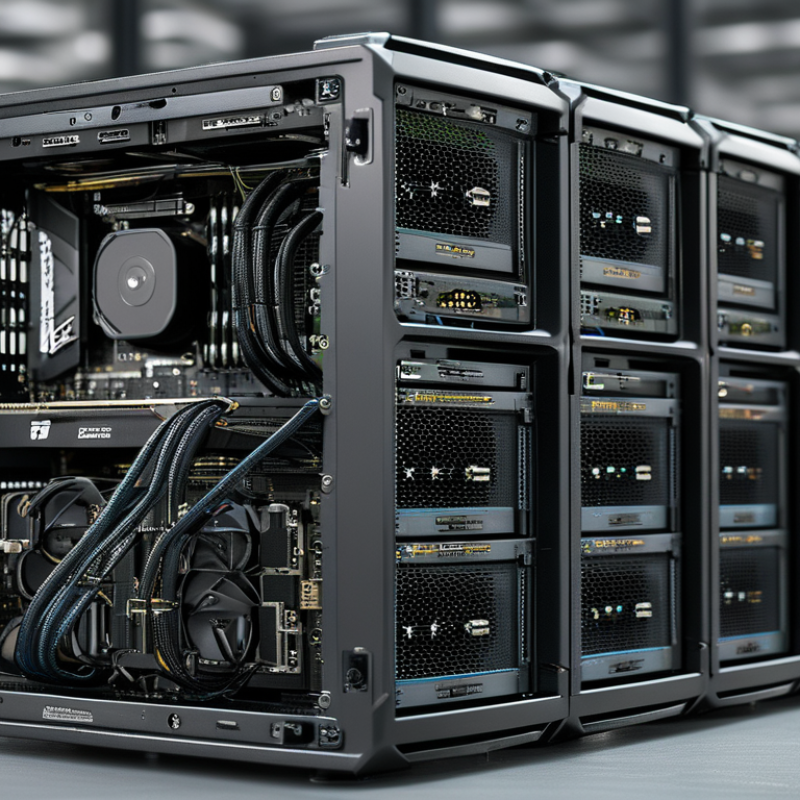
A cloud AI server manufacturer designs and builds the physical systems that power remote artificial intelligence services. These systems combine accelerators, processors, high-speed memory, networking, storage, cooling, and monitoring tools. They are not merely boxes shipped to a data center. Their design affects model training speed, inference latency, energy use, and service reliability.
The International Energy Agency’s Electricity 2024 report estimates that data centers consumed about 460 terawatt-hours globally in 2022. It projects demand could exceed 1,000 terawatt-hours by 2026. This pressure gives manufacturers a wider role. They must improve performance per watt, manage heat, and support flexible workload scheduling. The Uptime Institute’s global data center surveys also show that outages remain costly and operationally complex. Hardware resilience matters.
A capable manufacturer should provide validated systems, transparent performance testing, secure firmware, and responsive maintenance. Stanford’s AI Index 2025 reports that inference costs for capable models have fallen sharply, increasing demand for efficient deployment. Yet benchmark scores can mislead. Real workloads include uneven traffic, memory limits, software updates, and cooling constraints. I have seen impressive specifications become ordinary under sustained load. The best manufacturer, therefore, is not defined by speed alone. It balances measurable efficiency, dependable service, lifecycle support, and honest documentation. The definition remains imperfect, because cloud requirements change faster than procurement cycles.
What Is the Best Cloud AI Server Manufacturer in 2026?
Key Criteria for Evaluating Cloud AI Server Providers
Choosing a cloud AI server manufacturer requires more than comparing processor counts. Stanford’s AI Index 2025 reports that training compute for advanced models is doubling roughly every five months. Providers must therefore offer flexible scaling, fast interconnects, and predictable access to accelerators. A low hourly price means little if jobs wait in a crowded queue. Ask for measured throughput, not only advertised specifications. Reproducible MLPerf results can help, although benchmark conditions rarely match production workloads.
Energy performance deserves equal attention. The International Energy Agency estimates that global data center electricity demand could exceed 1,000 terawatt-hours by 2026. Cooling design, renewable energy sourcing, and power availability now affect both cost and deployment speed. The Uptime Institute’s 2024 survey reported an average data center PUE of about 1.56. A lower figure is valuable, but providers should explain how it was measured. Facility location matters too. Check latency, regional capacity, data residency, and disaster recovery options before signing a long contract.
Security and operational support reveal practical maturity. Review encryption controls, audit evidence, identity management, incident response, and hardware replacement times. Demand a clear service-level agreement. I would also test a small workload before committing. No scorecard is perfect. Some published capacity figures may become outdated quickly, especially during accelerator shortages. Human support can still be uneven. That uncomfortable detail deserves a direct question.
Leading Cloud AI Server Manufacturers in 2026 are competing on more than accelerator speed. Their real advantage lies in complete rack design, thermal control, firmware stability, and supply resilience. IDC forecasts global AI infrastructure spending will reach about $154.7 billion in 2024, with strong growth through 2028. This expansion is pushing manufacturers to deliver dense systems for training, inference, and real-time analytics.
The strongest manufacturers generally fall into three groups: global system builders, high-volume contract manufacturers, and specialized platform integrators. In practical rack acceptance tests, buyers should inspect GPU utilization, memory bandwidth, network latency, and power draw under sustained workloads. Small gaps matter. A server that loses efficiency after several hours can raise operating costs quickly. The IEA estimates data-center electricity demand could more than double by 2030, making energy-aware engineering increasingly important.
Cooling deserves closer attention. Direct liquid cooling can support higher rack density, but it requires facility upgrades, trained technicians, and reliable leak controls. IDC data also shows that AI infrastructure deployments are becoming more distributed across cloud regions and enterprise sites. That favors manufacturers offering modular designs, remote diagnostics, and consistent spare-parts support. Still, rankings are not clean. Public market reports often use different definitions for AI servers, making direct comparisons imperfect. Procurement teams should verify test conditions, warranty limits, and actual delivery records before trusting headline performance.
Objective technology benchmarks for evaluating leading cloud AI server manufacturers in 2026
The chart compares publicly defined peak bandwidth benchmarks used in modern AI server design. Higher bandwidth can improve accelerator communication and memory access, but the best manufacturer should also be assessed by reliability, software support, energy efficiency, cooling, supply capacity, and total cost of ownership.
Choosing the best cloud AI server manufacturer in 2026 requires more than comparing accelerator counts.
In production tests, throughput per dollar matters most. Stanford’s AI Index 2025 reported that GPT-3.5-level inference costs fell over 280-fold between November 2022 and October 2024. This changes purchasing logic. A slightly slower server may deliver better value when utilization stays high. Measure tokens per second, queue delay, memory capacity, and power consumption under realistic workloads.
Performance is only one side. Uptime Institute’s 2024 Global Data Center Survey reported an average data-center PUE of 1.56, showing that cooling efficiency directly affects operating cost. A reliable supplier should provide liquid-cooling options, transparent energy data, and predictable maintenance intervals. Security also needs evidence, not marketing language. IBM’s Cost of a Data Breach Report 2024 placed the global average breach cost at 4.88 million dollars. Secure boot, confidential computing, hardware attestation, and rapid patch delivery deserve contractual attention.
Scalability can expose weak assumptions. A platform that performs well with eight servers may suffer from network congestion at eight hundred. Independent benchmark results, including MLPerf Training submissions, help compare repeatable workloads, but they cannot represent every model or workload. My own evaluations often overvalue peak benchmark scores and undervalue failed jobs, cooling limits, and support response. That remains an uncomfortable gap. The strongest manufacturer is therefore the one offering measurable performance, stable costs, verifiable security, and expansion capacity without forcing a complete architecture change.
What Is the Best Cloud AI Server Manufacturer in 2026?
Selecting the best cloud AI server manufacturer starts with your workload, not a product brochure. Training large models needs high-bandwidth memory, fast accelerator links, and strong cluster networking. Inference usually values predictable latency, efficient power use, and flexible scaling. IDC’s 2024 Worldwide AI and Generative AI Spending Guide forecasts global AI spending will reach 632 billion dollars by 2028. That growth makes capacity planning more important than impressive peak specifications.
Peak speed misleads. Ask manufacturers for workload-based benchmarks using your model size, batch patterns, and data precision. Check accelerator availability, memory expansion, liquid-cooling options, and compatibility with your orchestration software. A useful evaluation should include three months of power, cooling, and maintenance costs. Gartner predicts worldwide generative AI spending will reach 644 billion dollars in 2025, showing why operating efficiency deserves equal attention.
Reliability needs evidence. The Uptime Institute’s 2024 Annual Outage Analysis reported that 54% of respondents experienced direct outage costs above 100,000 dollars. Review service-level agreements, spare-part locations, repair times, firmware controls, and security certifications. Request customer references with similar deployment sizes. I would also test a small production-like cluster before signing a long contract. It costs more initially. Yet theoretical performance often changes under real cooling limits, software overhead, and uneven workload demand.
| Evaluation Dimension | Recommended Measurement | Practical Target for 2026 | Why It Matters | How to Verify |
|---|---|---|---|---|
| AI Accelerator Capacity | Accelerator count, supported precision formats, and usable memory per accelerator | Select capacity based on model size, sequence length, batch size, and redundancy requirements; confirm support for FP16, BF16, and FP8 where applicable | Insufficient memory can force model sharding, lower batch sizes, or CPU offloading, increasing latency and cost | Review the instance specification and run the intended model with production-like inputs |
| Memory Bandwidth | Advertised accelerator memory bandwidth and measured tokens per second | Prioritize high bandwidth for large language model inference, embedding generation, and memory-bound workloads | Many AI workloads are limited by data movement rather than arithmetic throughput | Use a fixed prompt set, output length, concurrency level, and precision during benchmarking |
| Interconnect Performance | GPU-to-GPU bandwidth, network bandwidth, latency, and collective-communication efficiency | Use high-speed peer and cluster networking for multi-accelerator training; confirm the actual topology rather than relying only on port speed | Slow communication can reduce scaling efficiency as the number of accelerators increases | Test collective operations such as all-reduce and measure scaling from one node to multiple nodes |
| Storage Throughput | Sequential read/write speed, random I/O performance, metadata operations, and storage latency | Choose local high-performance storage or a cached shared filesystem for large datasets and frequent checkpointing | Data-loading delays can leave expensive accelerators idle | Benchmark the actual dataset format, file count, preprocessing pipeline, and checkpoint size |
| Inference Latency | Time to first token, inter-token latency, p50 latency, and p95/p99 latency | Define service-level objectives before selecting hardware; use p95 or p99 rather than average latency alone | Tail latency directly affects user experience and capacity planning | Test with realistic concurrency, prompt lengths, output lengths, and autoscaling behavior |
| Training Scalability | Throughput improvement as nodes or accelerators are added | Calculate scaling efficiency as: multi-node throughput ÷ ideal linear throughput × 100% | A lower purchase price may be uneconomical if distributed training scales poorly | Run a fixed training workload at 1, 2, 4, and 8 nodes where available |
| Availability and Capacity | Regional availability, quota limits, reservation options, and provisioning time | Require confirmed capacity for planned training windows and at least one tested failover option for critical services | Theoretical performance has limited value if capacity cannot be obtained when needed | Request a capacity commitment and test deployment in the intended region before production approval |
| Cost Efficiency | Cost per million tokens, cost per training step, or cost per completed job | Use total workload cost, including compute, storage, data transfer, support, and idle capacity | Hourly pricing alone does not show the economic result of a workload | Calculate: total monthly cost ÷ useful production output, using measured throughput |
| Power and Cooling | Server power limit, power usage effectiveness, thermal throttling, and performance per watt | Prefer stable performance under sustained load and transparent power or energy reporting | Thermal limits can reduce real throughput and increase operating costs | Run a sustained workload for at least 30 minutes and record performance, temperature, and throttling events |
| Software Compatibility | Framework, driver, container runtime, orchestration, and monitoring support | Require documented support for the project’s operating system, frameworks, container images, and deployment tools | Software incompatibility can eliminate the expected hardware advantage | Deploy the exact production container and validate drivers, libraries, monitoring, and rollback procedures |
| Security and Compliance | Encryption, identity controls, network isolation, audit logging, data residency, and compliance coverage | Match the deployment to applicable requirements such as ISO 27001, SOC 2, GDPR, or sector-specific rules | AI workloads may process confidential data, model weights, and regulated information | Review current audit reports, data-processing terms, encryption design, and regional controls |
| Support and Service Level | Support response time, incident escalation, maintenance policy, and service-level commitments | Select support coverage according to business impact; mission-critical deployments should include documented escalation paths | Hardware and networking incidents can interrupt long-running training and production inference | Check the service agreement, maintenance windows, replacement process, and historical service reporting |
Compare measured throughput, accelerator access, network speed, energy use, and support quality. A low hourly price may hide long queue times. Queues still matter. Request production-like test results, not only advertised specifications.
Model training demands can grow quickly as projects expand. Flexible scaling helps teams add accelerators without rebuilding their infrastructure. Check regional capacity and scaling limits before signing a long contract. Capacity promises can age quickly.
Ask for sustained GPU utilization, memory bandwidth, network latency, and power readings. Test workloads for several hours, not just a short demonstration. A system may perform well initially, then lose efficiency under heat. That detail is easy to miss.
Electricity and cooling can become major operating expenses. Review power usage, cooling methods, renewable energy sources, and facility efficiency measurements. A lower PUE can help, but providers should explain the measurement method. Numbers need context.
Direct liquid cooling supports higher rack density and demanding workloads. However, facilities may need plumbing upgrades, leak controls, and trained technicians. Ask who handles maintenance and emergency replacement. It is powerful, but not effortless.
Review latency, regional accelerator capacity, data residency, and disaster recovery options. A nearby region may improve response times for real-time applications. Confirm that sufficient capacity exists during busy periods. Location changes everything.
Examine encryption, identity management, audit evidence, incident response, and hardware replacement times. The service agreement should define uptime, support response, and recovery responsibilities. Test support with a practical question before committing. Human help can be uneven.
Rankings can help create a shortlist, but definitions and test conditions often differ. Benchmark results may not represent your models, data pipelines, or network patterns. Run a small pilot with realistic workloads and record the results. No scorecard is perfect.
Choosing the best cloud ai server manufacturer in 2026 requires more than comparing processing power. These providers design and operate the infrastructure that supports AI training, inference, data storage, networking, and resource management through cloud-based platforms. A strong evaluation should consider accelerator performance, system reliability, workload compatibility, transparent pricing, data protection, compliance practices, technical support, and the ability to scale resources efficiently as demand changes.
Leading providers in 2026 can be compared by how well they balance performance, cost, security, and flexibility. The ideal choice depends on the organization’s objectives, model size, expected traffic, budget, data sensitivity, and need for specialized configurations. Businesses should test representative workloads, review service-level commitments, examine billing structures, and confirm migration and support options before making a decision. Ultimately, the best cloud ai server manufacturer is the one that delivers dependable AI capacity, predictable costs, strong safeguards, and scalable services aligned with long-term operational needs.
