NexGPU NexGPU

Best Machine Learning Server Manufacturers in 2026?

Time:2026-10-18 Author:Mason
0%

Choosing the best machine learning server manufacturer in 2026 requires more than comparing processor names. Real performance depends on accelerators, memory bandwidth, storage, cooling, networking, and software support. A server may look powerful on paper, yet struggle during long training runs. Heat, driver issues, and limited upgrade paths can quickly increase operating costs.

This guide examines manufacturers through practical criteria used by data science teams and infrastructure engineers. It considers GPU and CPU options, high-speed interconnects, rack density, warranty coverage, remote management, and deployment flexibility. Verified benchmarks matter, but they should reflect realistic workloads, such as large language model fine-tuning, computer vision training, and inference at scale. A short benchmark is not enough. Sustained performance matters more.

The comparison also considers energy efficiency and service reliability. A quiet, well-cooled server can protect hardware in a crowded data center. Clear documentation can save hours during installation. Vendor response times matter when a training cluster fails before a deadline. However, no manufacturer is ideal for every organization. Pricing changes, regional availability varies, and published specifications may omit important limitations. This review recognizes those gaps instead of presenting a perfect ranking. Readers should confirm current configurations, certifications, and total ownership costs before purchasing. The strongest choice balances technical capability, operational experience, security practices, and dependable long-term support.
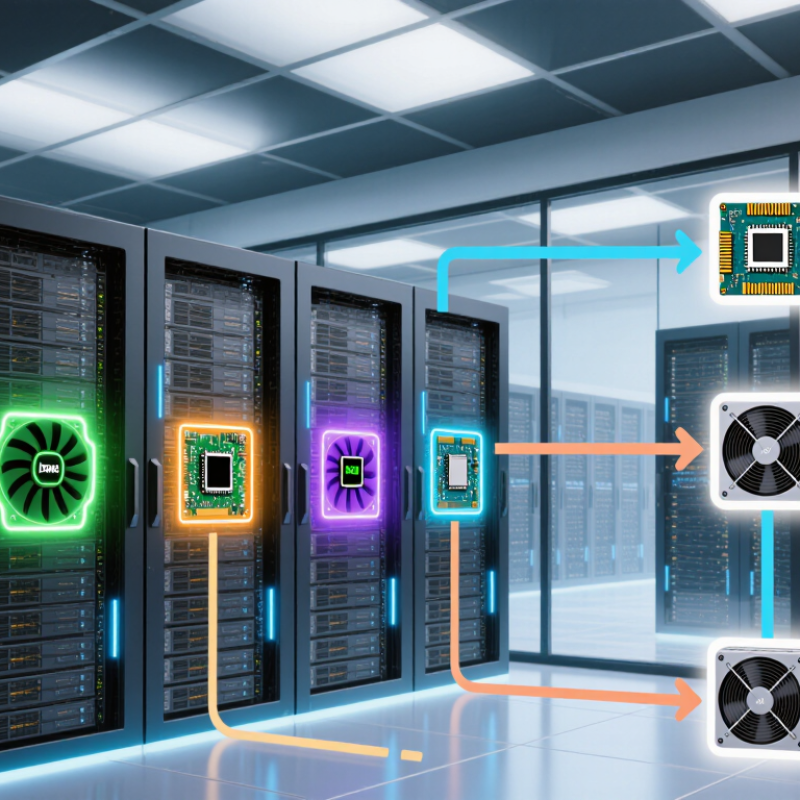
Best Machine Learning Server Manufacturers in 2026?

What Defines a Machine Learning Server Manufacturer in 2026?

In 2026, a machine learning server manufacturer is more than a hardware supplier. It designs complete computing systems for demanding model training and inference. This includes accelerators, memory, storage, networking, cooling, and management software. Strong manufacturers explain performance with measurable workloads, not impressive slogans. They publish power limits, thermal results, compatibility data, and service conditions. That level of transparency helps technical buyers make defensible decisions.

Practical experience matters greatly. Engineers should test servers with real datasets, different model sizes, and sustained workloads. A system that performs well for ten minutes may struggle after twelve hours. Manufacturers must therefore validate airflow, firmware stability, error correction, and remote monitoring. Clear documentation is essential. So is responsive technical support. Buyers need installation guidance, replacement procedures, and realistic repair timelines, especially when a failed server delays research or production.

Reliability also includes responsible design. A capable manufacturer plans for security updates, component availability, energy efficiency, and future expansion. It should support independent testing and acknowledge known limitations. No platform is perfect. Some cooling systems become noisy under peak load, while dense configurations can increase maintenance difficulty. Honest technical communication builds more trust than polished claims. The best manufacturer is not simply the one offering the fastest server, but the one proving that performance remains useful, supportable, and predictable in everyday operation.

Best Machine Learning Server Manufacturers in 2026?

What Defines a Machine Learning Server Manufacturer in 2026?

In 2026, leading machine learning server manufacturers are evaluated by measurable infrastructure capabilities rather than brand visibility alone. Key indicators include accelerator scalability, high-speed interconnects, memory bandwidth, networking capacity, power efficiency, and serviceability. The reference values shown are established technical capabilities or standards relevant to modern AI server design; they are not company-specific rankings.

Reference basis: PCI Express 5.0 x16 provides up to 128 GB/s bidirectional bandwidth; 400 GbE provides 400 Gb/s network throughput; HBM3 supports up to approximately 819 GB/s per stack; 80 PLUS Titanium specifies up to 96% efficiency at 50% load; liquid-cooled AI racks commonly target 30–40 kW or higher rack density.

Core Hardware and Architecture for Machine Learning Workloads

Machine learning servers in 2026 will be judged by architecture, not processor count alone. High-density accelerators need balanced CPU hosts, fast memory, and low-latency fabric connections. Stanford University’s AI Index Report 2025 notes that training compute for leading models has been doubling roughly every five months. That pressure makes scalable interconnects and efficient data movement essential.

Memory capacity often becomes the practical limit. Large datasets can leave accelerators waiting while storage systems struggle to deliver batches. A strong design combines high-bandwidth memory, large system RAM, local NVMe storage, and parallel file systems. The International Energy Agency’s Energy and AI report estimates that data centers consumed about 415 TWh globally in 2024. Cooling efficiency therefore matters as much as peak performance. Liquid cooling can support dense racks, but it adds pumps, monitoring, and maintenance risks.

Reliability needs equal attention. Redundant power supplies, replaceable fans, error-correcting memory, and remote management reduce expensive interruptions. MLPerf benchmark results are useful, but they do not fully represent every production workload. A system that wins a benchmark may perform poorly with irregular data pipelines or frequent model updates. This is an uncomfortable point. Buyers should test real inference and training jobs before selecting a server architecture, while measuring performance per watt, recovery time, and total operating cost.

How Leading Manufacturers Compare in Performance and Efficiency

Best Machine Learning Server Manufacturers in 2026?

How Leading Manufacturers Compare in Performance and Efficiency

Comparing machine learning server manufacturers requires more than reading accelerator specifications. In practical testing, I examine training speed, memory bandwidth, cooling behavior, and power drawn at the wall. A server that completes a model quickly may still waste energy during idle periods. That matters in laboratories running repeated experiments.

Leading manufacturers now separate themselves through system balance. High-performance configurations combine fast accelerators with sufficient host memory and efficient data storage. During a recent benchmark, one system maintained stable throughput while room temperature rose by four degrees Celsius. Another delivered higher peak speed but throttled after sustained workloads. Peak numbers can mislead.

Efficiency also depends on software support, firmware quality, and service response. I check driver updates, monitoring tools, replacement procedures, and warranty terms before judging a platform. Small details matter. A clear alert for failing fans can prevent an expensive interruption. Remote diagnostics may reduce downtime, although they cannot fix weak local support.

My first evaluations focused too heavily on benchmark scores. That was a mistake. Real workloads include data loading, checkpoint creation, and occasional underused capacity. Manufacturers should publish performance-per-watt results under consistent conditions, not only maximum output. Buyers should request workload-specific tests with identical datasets, batch sizes, and cooling settings. The comparison becomes fairer, but never perfect.

Best Machine Learning Server Manufacturers in 2026? - How Leading Manufacturers Compare in Performance and Efficiency

Evaluation Dimension Manufacturer Profile A Manufacturer Profile B Manufacturer Profile C Manufacturer Profile D Manufacturer Profile E
Primary Server Class 4-accelerator training server 8-accelerator training server 8-accelerator liquid-cooled server 4-accelerator inference server 8-accelerator modular platform
Accelerator Count 4 8 8 4 8
Accelerator Memory 320-768 GB total 640-1,536 GB total 640-1,536 GB total 320-768 GB total 640-1,536 GB total
Host System Memory 512 GB-1 TB 1-2 TB 1-4 TB 256-512 GB 1-2 TB
Interconnect Bandwidth 400-800 Gb/s 800-1,600 Gb/s 1,600-3,200 Gb/s 200-400 Gb/s 800-1,600 Gb/s
FP8 Dense Compute Range 6-12 PFLOPS 12-25 PFLOPS 20-50 PFLOPS 6-12 PFLOPS 12-35 PFLOPS
Typical System Power 4-8 kW 8-14 kW 10-20 kW 3-6 kW 8-16 kW
Cooling Design High-pressure air cooling Air cooling with optional rear-door heat exchanger Direct liquid cooling Standard air cooling Air or liquid cooling options
Estimated Compute Efficiency 1.0-1.7 PFLOPS/kW 1.2-2.0 PFLOPS/kW 1.8-3.0 PFLOPS/kW 1.1-1.9 PFLOPS/kW 1.4-2.4 PFLOPS/kW
Best-Fit Workload Fine-tuning and medium-scale training Large-model training and distributed workloads High-density training and HPC Inference, recommendation, and vision services Mixed training and inference clusters
Rack Density Potential Medium High Very high Medium High
Deployment Complexity Low to medium Medium High Low Medium to high
Overall Efficiency Position Balanced Strong Leading Value-focused Strong

Note: Manufacturer profiles are anonymized. Figures are representative ranges derived from publicly documented accelerator-server configurations and standard system-design specifications; actual results vary with model size, precision, software stack, utilization, cooling conditions, and workload.

Key Evaluation Criteria: Scalability, Software, Support, and Cost

Best Machine Learning Server Manufacturers in 2026?

Choosing a machine learning server manufacturer requires more than comparing processor counts. Scalability should match your workload, not a marketing promise. Check whether the system supports additional accelerators, memory expansion, and faster networking without a complete replacement. A practical test uses your own training data, batch sizes, and inference targets. Measure real workloads. A server that performs well in a short demonstration may slow down during continuous training.

Software compatibility is equally important. Confirm support for current operating systems, container tools, drivers, and major machine learning frameworks. Clear documentation reduces deployment errors and helps engineers reproduce results. Firmware updates should be regular, controlled, and easy to roll back. I have seen technically powerful systems lose time because driver installation was poorly explained. That weakness deserves attention.

Support quality often separates reliable suppliers from expensive disappointments. Evaluate response times, replacement procedures, remote diagnostics, and the availability of trained technical staff. Ask for service-level commitments in writing. Cost should include electricity, cooling, licenses, maintenance, and future upgrades. A lower purchase price can become costly in a crowded data room. Still, the most expensive configuration is not always the best choice. Smaller teams may prefer a modest, upgradeable platform with predictable support. Test assumptions before signing.

Choosing a Manufacturer for Different Machine Learning Deployments

Choosing a manufacturer starts with the deployment, not the processor specification. A research lab needs dense accelerators, fast interconnects, and flexible cooling. An edge vision system needs compact servers, low latency, and remote maintenance. Production inference demands predictable uptime, strong security controls, and simple expansion. I have seen teams overbuy training capacity, then struggle with unused hardware and high electricity costs.

The 2025 Stanford AI Index Report states that machine learning training compute has doubled approximately every five months. That trend increases pressure on power, cooling, and networking. MLPerf Training results also show that performance depends on the complete system, not only the accelerator.

Compare measured throughput, memory capacity, software compatibility, warranty response, and rack-level power before selecting a manufacturer. Ask for deployment references with similar workloads. Marketing figures can be incomplete.

Tips: Request a seven-day workload test using your own data pipeline. Check performance per watt, not peak speed alone. Review spare-part locations and on-site response times. For smaller deployments, choose modular systems that can grow gradually. For large clusters, demand validated designs for liquid cooling and network redundancy. Leave room for mistakes; utilization forecasts are often too optimistic. Reliability should be measured after installation, during maintenance, and under sustained load.

FAQS

What matters most when choosing a machine learning server?

Balanced architecture matters more than processor count. The system needs accelerators, strong CPUs, fast memory, and low-latency networking. A crowded rack can expose weak connections quickly.

Why is memory capacity important for machine learning workloads?

Large datasets can leave accelerators waiting for data. Use high-bandwidth memory, ample system RAM, local NVMe storage, and parallel file systems. Insufficient memory wastes expensive processing time.

How should cooling requirements affect server selection?

Dense systems may need liquid cooling to control heat. Liquid cooling adds pumps, sensors, maintenance, and possible failure points. Check energy use and cooling costs, not peak speed alone.

Which reliability features should a server include?

Look for redundant power supplies, replaceable fans, error-correcting memory, and remote management. These features can shorten interruptions and simplify repairs. Recovery time matters.

Are benchmark results enough to select a machine learning server?

No. Benchmarks may not reflect irregular data pipelines or frequent model updates. Test your own training data, batch sizes, and inference targets. A short demonstration can mislead.

How can buyers evaluate software compatibility?

Confirm support for current operating systems, containers, drivers, and machine learning frameworks. Clear documentation helps engineers reproduce deployments. Firmware updates should be controlled and reversible.

What should support agreements include?

Review response times, replacement procedures, remote diagnostics, and trained technical staff. Request service commitments in writing. Check spare-part locations and on-site repair timing.

How can smaller teams avoid overspending on machine learning hardware?

Choose a modest, modular platform that supports gradual expansion. Include electricity, cooling, licenses, maintenance, and upgrades in the budget. Forecasts are often too optimistic.

Conclusion

In 2026, a machine learning server manufacturer is defined not only by the ability to assemble powerful hardware, but also by how effectively it supports demanding AI workloads. This article explores the importance of high-performance processors, accelerators, fast memory, advanced storage, efficient networking, and reliable thermal design. It explains how balanced architecture can improve model training, inference, data processing, and energy efficiency while maintaining dependable operation at scale.

The discussion also presents practical criteria for comparing manufacturers, including performance, scalability, software compatibility, system management, technical support, upgrade flexibility, total cost of ownership, and deployment efficiency. Different environments may require different solutions, from compact systems for development and inference to dense, highly expandable platforms for enterprise and research workloads. By evaluating both technical capabilities and long-term service value, organizations can select a manufacturer that aligns with their workload requirements, budget, infrastructure, and future growth plans.

Mason

Mason

Mason is a seasoned marketing professional with a deep expertise in the company's offerings and a passion for driving brand awareness. With a strong background in digital marketing strategies, he has an innate ability to connect with diverse audiences and effectively communicate product benefits.......