NexGPU NexGPU

What Is an NVIDIA GPU Server Manufacturer?

Time:2026-10-23 Author:Isabella
0%

What Is an NVIDIA GPU Server Manufacturer?

An NVIDIA GPU server manufacturer is a company that designs, builds, tests, and supports servers using NVIDIA GPUs. It is more than a box assembler. The manufacturer selects compatible CPUs, memory, storage, power supplies, cooling systems, and networking components. Each choice affects performance, stability, and operating cost.

Think of a rack filled with servers, hot air leaving the rear, and high-speed cables connecting every node. A qualified nvidia gpu server manufacturer must manage these practical details carefully. It may integrate NVIDIA HGX platforms, GPU modules, InfiniBand networks, and software designed for CUDA workloads. It should also validate firmware, thermal performance, driver compatibility, and long-duration workloads before delivery.

Jensen Huang, NVIDIA’s founder and CEO, called generative AI “the most important platform transition in computing history.” His statement explains why reliable GPU infrastructure matters. Training a large model can involve thousands of GPUs, complex scheduling, and constant data movement. Small design weaknesses may become expensive failures.

Experience matters here.

A capable manufacturer provides more than advertised hardware. It offers configuration advice, burn-in testing, remote monitoring, maintenance, and clear warranty terms. Customers should examine measured performance, power consumption, noise levels, and support response times. Marketing claims alone are not enough.

The term “manufacturer” can also be confusing. Some companies build systems themselves, while others integrate products from multiple suppliers. This distinction deserves closer review. Buyers should verify factory capability, NVIDIA certification, component traceability, and after-sales service. A strong nvidia gpu server manufacturer helps organizations deploy dependable computing infrastructure, but no supplier removes every operational risk.
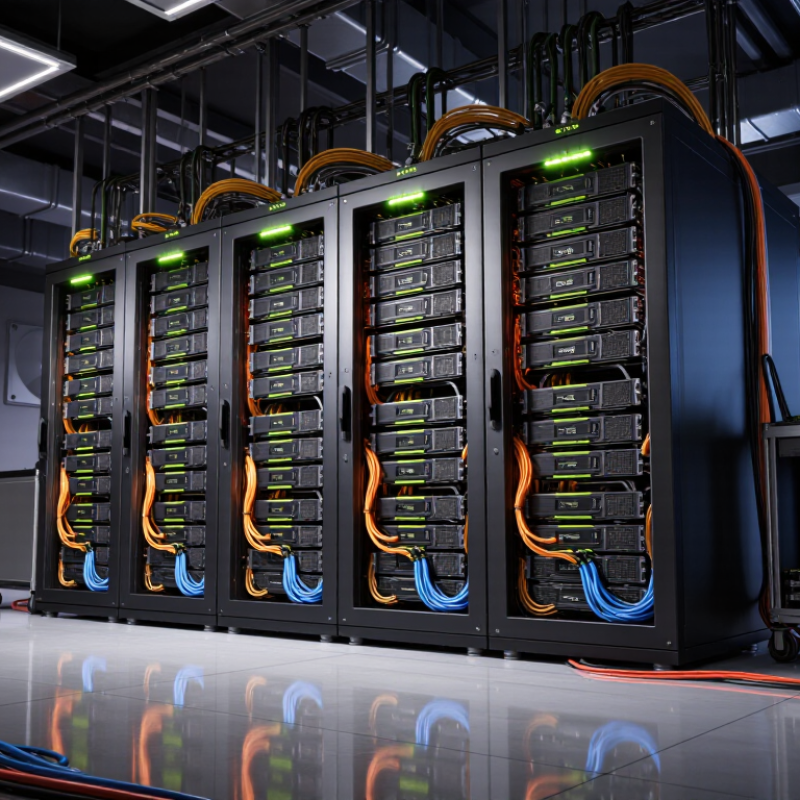
What Is an NVIDIA GPU Server Manufacturer?

Definition of an NVIDIA GPU Server Manufacturer

An NVIDIA GPU server manufacturer is a specialized company that designs, builds, and supports servers using NVIDIA graphics processors. Its role extends beyond installing powerful cards in a metal chassis. It must match processors with suitable CPUs, memory, storage, power supplies, cooling systems, and network adapters. The goal is stable performance under demanding workloads, such as artificial intelligence training, scientific simulation, and video processing.

Details matter. A reliable manufacturer checks airflow through each rack unit and measures heat near the GPU, not only at the room entrance. It may run burn-in tests, firmware checks, and workload simulations before shipment. Clear documentation should explain power limits, supported operating systems, maintenance steps, and replacement procedures. Technical support also matters when a server shows memory errors at 2 a.m.

The definition is still incomplete without accountability. A manufacturer should provide traceable components, realistic performance data, and a warranty with understandable conditions. I have found that advertised speed can distract buyers from noise, energy use, and service delays. That is an uncomfortable point. A well-built server may perform slightly below a laboratory result, yet remain dependable in daily operation. Buyers should compare tested workloads, thermal records, upgrade options, and support response times. A manufacturer earns trust through repeatable engineering, not impressive specifications alone.

Core Responsibilities in GPU Server Production

A GPU server manufacturer is more than an assembler. It converts accelerator designs into dependable, rack-ready systems. Its core responsibility starts with architecture. Engineers match compute boards, CPUs, memory, storage, networking, and power delivery. They also model airflow before metal is cut. Small errors matter. A blocked inlet can raise temperatures across a dense rack. The International Energy Agency’s Electricity 2024 report estimates that data centers consumed about 460 TWh globally in 2022. It projects demand may exceed 1,000 TWh by 2026. Efficient power conversion and thermal design are production requirements, not optional upgrades.

Testing is equally important. Manufacturers must validate thermal performance, firmware stability, power behavior, cable routing, and sustained workloads. They should test servers under realistic conditions, not only short laboratory runs. Uptime Institute’s 2024 Global Data Center Survey continues to identify power problems as a leading cause of impactful outages. This makes load testing and protection circuits essential. Traceable component records also support repairs, audits, and warranty decisions.

Quality control needs evidence. Each system should receive burn-in testing, temperature logs, serial tracking, and clear service documentation. Yet no factory test predicts every rack environment. That limitation deserves honesty. Dust, uneven airflow, and rushed installation can still create failures. Experienced manufacturers reduce these risks through installation guidance and field feedback. They should also revise designs when real operating data exposes weak assumptions. Reliability is built through repeated measurement, not confident promises.

Key Components of an NVIDIA GPU Server

A capable GPU server begins with its processing units, but performance depends on the entire platform. The motherboard must provide enough high-speed expansion slots for multiple accelerators. Slot spacing also matters. Crowded cards restrict airflow and complicate maintenance. A powerful host processor feeds workloads to the accelerators and manages storage, networking, and system tasks.

Memory capacity should match the application, not just the processor. Scientific models may need large error-correcting memory pools, while analytics workloads can depend more on fast storage. Solid-state drives reduce data-loading delays, especially when datasets are frequently reused. High-speed networking connects the server to shared storage or other compute nodes. These connections need careful testing under sustained traffic.

Cooling is decisive. Efficient fans, heat sinks, and a well-designed chassis keep temperatures stable during long training sessions. Power supplies must provide sufficient headroom for startup surges and full-load operation. Redundant units can improve service continuity. Firmware, monitoring tools, and remote management are equally important for diagnosing failures without opening the cabinet. I once underestimated cable routing during a deployment. That mistake increased service time. A specification sheet can look perfect, yet poor airflow or weak validation can reduce real performance. Reliable manufacturers therefore test thermal behavior, power stability, driver compatibility, and workload performance before shipping each configuration. Small gaps matter.

Manufacturing and Quality Assurance Processes

A GPU server manufacturer is defined by more than assembly speed. Its process begins with controlled component receiving. Technicians check serial numbers, connector condition, memory modules, and power units. Each part receives a traceable lot record. This record follows the server through testing. ESD-safe benches and humidity monitoring protect sensitive boards. Small details matter here.

During assembly, trained technicians use torque-controlled drivers on heatsink fasteners. Uneven pressure can create thermal gaps and unstable performance. Cable routing is inspected for airflow obstruction. Firmware, drivers, and system settings are verified against an approved build sheet. Engineers then run staged tests, including memory checks, PCIe communication tests, network loading, and GPU stress workloads. Thermal chambers expose weak cooling designs. Burn-in testing runs units for hours under sustained loads. Test results are stored, reviewed, and linked to individual serial numbers. This supports repeatability, not just a passing result.

Quality assurance also includes sampling after production. Inspectors review chassis joints, labels, fan noise, vibration, and packaging protection. Failed units are isolated and analyzed before release. Corrective actions should change a process, not merely repair one server. In practice, no factory is flawless. A rushed inspection or unclear checklist can still create risk. That uncomfortable fact deserves attention. Reliable manufacturers encourage technicians to report near misses without fear. They audit suppliers, retrain staff, and recheck recurring faults. Customers should ask for test records, acceptance criteria, warranty terms, and service response times. Clear evidence is stronger than polished claims.

What Is an NVIDIA GPU Server Manufacturer? - Manufacturing and Quality Assurance Processes

Manufacturing or QA Stage Primary Activities Key Quality Controls Typical Evidence or Output
Product and System Design Define the server architecture, GPU layout, CPU platform, memory configuration, storage, networking, power delivery, and cooling method. Design reviews, power-budget analysis, thermal simulation, airflow planning, serviceability review, and component compatibility checks. Approved engineering drawings, bill of materials, electrical diagrams, thermal design documentation, and test plans.
Supplier and Component Qualification Source GPUs, server boards, memory modules, power supplies, storage devices, network adapters, fans, cables, and chassis parts from qualified suppliers. Incoming inspection, supplier audits, certificate review, lot traceability, counterfeit-part prevention, and approved-vendor controls. Supplier qualification records, inspection reports, certificates of conformity, and serialized inventory records.
Incoming Material Inspection Check delivered components for correct part numbers, quantities, physical condition, packaging integrity, and visible damage. Visual inspection, dimensional checks, barcode scanning, electrical sampling, and verification against purchase specifications. Accepted, quarantined, or rejected material status with inspection and traceability records.
Printed Circuit Board Assembly Mount electronic components on server boards, power boards, fan controllers, and other circuit assemblies using automated or controlled assembly processes. Solder-paste inspection, automated optical inspection, X-ray inspection for hidden joints, and controlled rework procedures. Assembly inspection results, solder-process records, rework logs, and board-level test results.
Mechanical Assembly Install the chassis, motherboard, GPUs, memory, storage, power supplies, cooling assemblies, risers, cables, and rack-mount hardware. Work instructions, torque control, connector verification, cable-routing inspection, grounding checks, and configuration verification. Completed server assembly, operator checklist, torque records where required, and configuration traceability.
Firmware and Software Configuration Install approved firmware, system management software, operating-system images, drivers, and hardware monitoring tools. Version control, checksum verification, secure configuration, compatibility testing, and controlled update procedures. Configuration report, firmware versions, software image record, and system identification data.
Power-On and Functional Testing Verify boot behavior, hardware detection, GPU visibility, memory capacity, storage operation, network interfaces, fans, sensors, and management functions. Automated test scripts, diagnostic logs, error-code review, sensor validation, and pass/fail criteria for every major subsystem. Functional test report and recorded hardware inventory.
GPU and Compute Validation Run compute workloads to verify GPU enumeration, memory stability, interconnect operation where applicable, application compatibility, and sustained processing behavior. Error monitoring, workload completion checks, corrected-error review, thermal observation, and repeatability testing. Compute validation logs, diagnostic results, thermal readings, and exception records.
Thermal and Cooling Testing Evaluate temperatures, fan response, airflow, acoustic behavior, and performance stability during idle, typical, and sustained high-load conditions. Temperature-limit checks, fan-speed verification, airflow inspection, thermal throttling monitoring, and cooling-failure alerts. Thermal test curves, fan-control results, alarm verification, and cooling-system acceptance record.
Electrical Safety and Reliability Testing Assess power input, grounding, insulation, protection features, startup behavior, and operation under controlled electrical conditions. Electrical safety testing, power-sequencing checks, overload protection verification, and compliance testing against applicable requirements. Safety test records, power measurements, compliance documentation, and corrective-action reports when needed.
Burn-In and Stress Testing Operate assembled servers under sustained workloads to identify intermittent faults, thermal instability, memory errors, storage problems, or power issues before shipment. Continuous log collection, workload monitoring, temperature tracking, error screening, and predefined acceptance criteria. Burn-in duration record, system logs, failure analysis, and release decision.
Final Inspection and Release Confirm product configuration, labeling, accessories, documentation, physical condition, and test completion before packaging. Independent checklist review, serial-number verification, cosmetic inspection, data sanitization, and approval by authorized personnel. Final inspection checklist, release authorization, packing list, and product serial record.
Packaging and Shipping Protection Protect servers against shock, vibration, electrostatic discharge, moisture, and improper handling during transportation. Packaging inspection, protective-material verification, orientation labeling, and shipment documentation review. Packaging checklist, shipment record, handling instructions, and transport documentation.
Post-Sale Quality Management Track field failures, returns, service events, customer feedback, firmware issues, and recurring manufacturing defects. Failure-rate analysis, root-cause investigation, corrective and preventive action, warranty trend monitoring, and process improvement. Service records, root-cause reports, corrective-action plans, and updated inspection or production procedures.

Note: Exact test methods, limits, and acceptance criteria vary according to the server design, intended workload, applicable safety requirements, and customer specifications.

How to Evaluate an NVIDIA GPU Server Manufacturer

Choosing an NVIDIA GPU server manufacturer requires more than checking accelerator counts.

The real test is whether the system performs reliably under sustained workloads. A credible manufacturer should provide complete configuration records, thermal test results, firmware versions, and independent benchmark data. Ask for results from workloads resembling yours, not only peak scores. A polished specification sheet proves little.

Power and cooling deserve close attention.

The International Energy Agency’s Electricity 2024 report estimates that data centers consumed about 460 TWh globally in 2022. It projects consumption could exceed 1,000 TWh by 2026. Therefore, evaluate rack density, airflow direction, liquid-cooling options, power redundancy, and measured heat output.

Ask how the manufacturer validates systems after assembly. Burn-in duration matters. So does failure reporting.

Service capability separates a manufacturer from a reseller.

Review replacement-part locations, response times, remote diagnostics, and escalation procedures. Uptime Institute’s Global Data Center Survey 2024 shows that outages still create serious financial and operational consequences, even when organizations improve resilience.

Request documented service-level commitments. Check whether engineers can support drivers, BIOS updates, network fabrics, and operating-system compatibility.

I would also inspect one production-ready chassis personally. My first evaluation once focused too heavily on benchmarks. That was a mistake. Long-term maintenance often costs more than the initial server invoice.

FAQS

What makes a GPU server perform well?

Performance depends on the complete platform, not only the accelerator cards. The motherboard needs enough high-speed slots and proper spacing. Crowded cards reduce airflow and complicate maintenance. Small gaps matter.

How should memory and storage be selected?

Choose memory according to the workload. Scientific models may need large error-correcting memory pools. Analytics tasks may benefit more from fast solid-state storage. Reused datasets load faster from solid-state drives.

Why is networking important in a GPU server?

High-speed networking connects the server with shared storage and other computing nodes. Connections should be tested under sustained traffic. Short tests can hide performance problems.

What cooling features should a reliable server include?

Efficient fans, suitable heat sinks, and a well-designed chassis help control temperatures. Stable cooling matters during long training sessions. Poor airflow can weaken real performance. Specifications can mislead.

How much power capacity is appropriate?

The power system needs headroom for startup surges and full-load operation. Redundant power units can improve service continuity. Actual power behavior should be tested, not guessed.

What manufacturing checks should be completed before assembly?

Technicians should verify serial numbers, connectors, memory modules, and power units. Each component needs a traceable lot record. Electrostatic-safe benches and humidity monitoring protect sensitive boards. Details matter.

How are assembled GPU servers tested?

Testing may include memory checks, expansion-bus communication, network loading, and accelerator stress workloads. Thermal chambers can expose weak cooling designs. Burn-in testing runs systems under sustained loads for hours. Passing once is not enough.

What quality records should customers request?

Customers should request test records, acceptance criteria, warranty terms, and service response times. Records should link results to individual serial numbers. Clear evidence is stronger than polished claims. No factory is flawless.

Conclusion

An nvidia gpu server manufacturer is a specialized company that designs, assembles, and tests high-performance servers built to support demanding workloads such as artificial intelligence, scientific computing, data analysis, and advanced visualization. Its core responsibilities include selecting compatible hardware, engineering system architecture, integrating graphics processing units with CPUs, memory, storage, networking, and power systems, and ensuring reliable thermal management. A well-designed server must balance computing performance, scalability, energy efficiency, serviceability, and long-term operating stability.

The manufacturing process typically involves component inspection, precision assembly, firmware configuration, performance validation, thermal testing, and quality assurance at multiple stages. To evaluate an nvidia gpu server manufacturer, buyers should consider its engineering capabilities, component quality, customization options, testing standards, delivery reliability, technical support, warranty policies, and experience with similar workloads. A dependable manufacturer should provide transparent specifications and solutions that can grow with changing computational requirements.

Isabella

Isabella

Isabella is a dedicated marketing professional with a sharp focus on driving brand growth and engagement through strategic content creation. With an extensive background in digital marketing, she combines her passion for storytelling with her keen understanding of industry trends to deliver......