NexGPU
Choosing the right AI inference server manufacturer is now a strategic decision for global buyers. Inference workloads must deliver fast responses, stable uptime, and predictable operating costs. A suitable server can process real-time recommendations, medical imaging, industrial vision, or language models without creating unnecessary delays.
This guide examines leading manufacturers through practical buying criteria. It considers GPU and accelerator compatibility, memory capacity, high-speed networking, cooling design, rack density, and power efficiency. It also reviews software support, firmware stability, warranty coverage, regional service availability, and deployment experience. These details matter when a server operates continuously in a data center with limited space and strict energy targets. A platform showing strong benchmark numbers may still perform poorly under mixed workloads. That assumption can fail.
Reliable evaluation requires more than reading product brochures. Buyers should compare latency, throughput, utilization, and total cost of ownership under realistic workloads. Testing with the intended model is valuable. So is checking independent reviews, certification records, and customer support response times. Manufacturers with transparent specifications and documented validation deserve closer attention. However, no shortlist is perfect. Supply conditions, export rules, local technicians, and evolving accelerator platforms can change the final decision. This overview therefore presents manufacturers as different options, not universal answers. It aims to help procurement teams ask sharper questions, identify operational risks, and select infrastructure that remains dependable as AI demand grows. Performance matters. So does accountability.
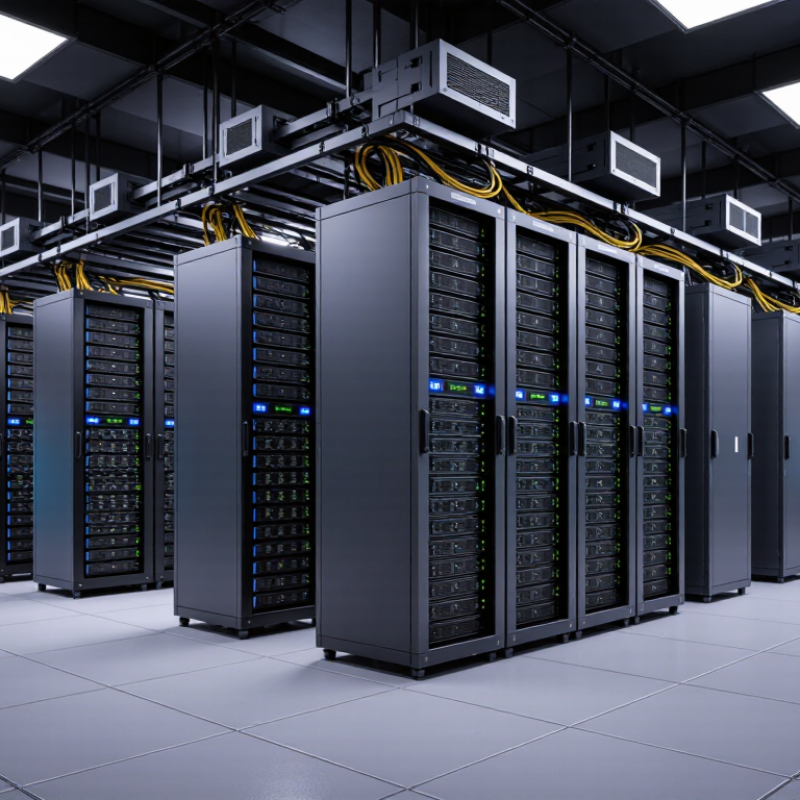
An AI inference server runs a trained model and produces results from new data. It does not usually learn from scratch. Instead, it receives requests, processes them, and returns predictions, generated text, images, or classifications.
A typical server may include accelerators, high-speed memory, network adapters, and storage for model files. In a real deployment, response time matters. A customer waiting three seconds for a simple recommendation may leave. Throughput matters too. One server might handle hundreds of smaller requests, but fewer large language model requests.
The best manufacturers usually offer balanced systems, not just powerful processors. Buyers should examine memory capacity, thermal design, software compatibility, and remote management tools. Ask for results using your model, input length, and expected request volume. Generic benchmarks can mislead. A server that performs well in a laboratory may struggle in a busy production environment.
Reliability also requires monitoring. Teams should track latency, error rates, power use, and hardware temperature. Security controls protect stored models and customer data. Energy consumption deserves attention as well. Lower operating costs can change the value of a server over several years.
Sizing is not always precise. Workloads change. Leave expansion capacity for new models, but avoid paying for unused hardware. Good purchasing decisions combine technical testing, supplier support, warranty terms, and clear deployment goals.
Top AI Inference Server Manufacturers for Global Buyers
Strong AI inference servers begin with predictable performance, not attractive specifications. Manufacturers should disclose accelerator compatibility, memory bandwidth, interconnect speed, and measured latency. IDC’s Worldwide AI and Generative AI Spending Guide projects global AI spending will reach more than $630 billion by 2028. This growth increases pressure on suppliers to deliver reliable, scalable systems.
Power and cooling now deserve equal attention. The International Energy Agency estimates data centers could consume over 1,000 terawatt-hours of electricity annually by 2026. Efficient power supplies, liquid-cooling options, airflow control, and clear thermal limits can reduce operational risk. That matters. A server that performs well in a laboratory may throttle inside a crowded rack.
Software support is another key feature. Buyers should examine driver stability, container compatibility, model optimization tools, monitoring dashboards, and security update policies. MLPerf Inference results show that throughput and latency can change sharply across different workloads. Reported peak performance is not enough. Manufacturers should provide results for real-time chat, image analysis, and batch processing. Some vendors still publish incomplete test conditions. That is a weakness worth questioning. Regional service coverage, replaceable components, warranty response times, and lifecycle documentation also influence total value. These details seem ordinary, yet they often decide whether an inference platform remains dependable after deployment.
Leading global AI inference server manufacturers are reshaping how organizations deploy trained models. Their systems process requests quickly, while controlling power, heat, and operating costs. For global buyers, manufacturing experience matters as much as accelerator performance. Practical evaluations show that reliable inference depends on balanced engineering. Memory bandwidth, thermal design, networking, and firmware must work together. A powerful processor cannot compensate for weak airflow or unstable power delivery. That detail is often missed.
Experienced manufacturers provide configurable platforms for language, vision, and industrial workloads. Buyers should examine supported model frameworks, memory capacity, expansion options, and remote management tools. Regional voltage requirements and safety certifications also deserve careful review. Clear documentation reduces installation errors across different data centers. Responsive technical support is equally important when a server operates across time zones. Delivery schedules should be verified, not assumed.
No selection is perfect. Some systems deliver impressive benchmark scores but perform less efficiently in mixed workloads. Others provide strong support but offer limited upgrade flexibility. Buyers should test representative models with real request patterns before signing large orders. Independent validation, transparent warranty terms, and measurable service commitments improve purchasing confidence. The strongest manufacturers explain limitations openly and provide practical deployment guidance, rather than relying only on attractive specifications.
Neutral comparison of common server deployment tiers based on accelerator capacity, a key specification global buyers evaluate when selecting AI inference infrastructure.
Reference configurations: accelerator counts commonly used in compact, mid-range, high-density, and maximum-density inference servers. Actual capacity varies by model, memory, cooling, and workload.
When comparing AI inference server suppliers, begin with workload evidence, not attractive product photos. Ask for measured latency, throughput, and power use under your expected model size. Request tests with realistic batch sizes, concurrent users, and input lengths. A short demo proves little. Check whether results remain stable after several hours of continuous operation.
A credible supplier should explain processor selection, memory capacity, storage speed, cooling design, and network options in clear language. Review component specifications carefully, including accelerator availability, power requirements, rack dimensions, and noise levels.
Suppliers with strong engineering experience can provide thermal reports, firmware records, and failure-rate data. They should also describe inspection procedures before shipment. Vague answers deserve more questions.
Service quality matters as much as hardware performance. Compare warranty terms, replacement procedures, remote diagnostics, delivery schedules, and local technical support. Ask for references from deployments with similar traffic patterns.
It is useful to inspect a sample server, including cable routing, airflow paths, and access to replaceable parts. A polished datasheet can still mislead.
I have seen excellent benchmark numbers lose value when cooling limits reduced performance in real rooms.
Budget calculations should include electricity, maintenance, import requirements, and future expansion. No comparison is perfect, because workloads change faster than purchasing cycles.
Selecting the right AI inference server begins with workload evidence, not advertised peak performance. Measure p95 latency, throughput, model memory, and tokens per watt under realistic traffic. A conversational system may need fast first-token response, while batch vision workloads may favor higher throughput. Small details matter: queue depth, cooling limits, network bandwidth, and support for quantized models.
The Stanford AI Index 2024 reported a roughly 280-fold decline in GPT-3.5-level inference costs between November 2022 and October 2023. That shift makes efficiency a purchasing priority, not a technical luxury. The International Energy Agency projects data-center electricity demand could exceed 1,000 TWh annually by 2026. Power draw deserves a line in every comparison sheet. Still, published figures can mislead. A server that wins a benchmark may disappoint with longer prompts, uneven traffic, or restricted thermal conditions. Test your own model mix.
Reliable evaluation should include a seven-day workload replay, failure recovery checks, and accuracy testing after compression. Check warranty response times and spare-part availability across regions. Open interfaces can reduce migration risk. However, broader compatibility sometimes means weaker optimization. That trade-off is easy to underestimate. Industry benchmark reports provide useful direction, but operational evidence should decide the final configuration.
Evaluate latency, throughput, model memory, power use, cooling, networking, firmware, and remote management.
Memory bandwidth affects how quickly models access data during requests.
Measure tokens per watt, throughput, power draw, and p95 latency under realistic traffic.
Not always.
Replay seven days of representative workloads.
Review memory capacity, expansion slots, cooling limits, network bandwidth, and power delivery.
Clear documentation reduces installation mistakes across different data centers.
Check supported model frameworks, quantization methods, interfaces, and expansion options.
Power consumption should appear in every comparison sheet.
No.
An AI inference server is a specialized computing system designed to run trained artificial intelligence models and deliver fast, reliable predictions for applications such as automation, analytics, language processing, and computer vision. This article explains the role of an ai inference server manufacturer and highlights the features buyers should evaluate, including processing performance, accelerator compatibility, memory capacity, energy efficiency, scalability, cooling design, security, and long-term technical support.
It also presents practical guidance for comparing global suppliers without focusing on brand names. Buyers should review product specifications, workload compatibility, deployment options, maintenance services, delivery capabilities, total ownership costs, and customization flexibility. The right AI inference server depends on factors such as model size, response-time requirements, expected user volume, operating environment, budget, and future expansion plans. A structured comparison can help organizations choose a dependable solution that balances performance, reliability, efficiency, and business needs.
