NexGPU
NexGPU
NexGPU
Explore the industry's leading high-density computing servers, designed for artificial intelligence, machine learning, and rapid cloud deployment.
The global transition to large language models (LLMs) and massive data arrays has placed unprecedented pressure on physical infrastructure. Modern architectures are evolving to meet these demands.
Traditional air cooling is hitting physical limits. Current racks are transitioning from 15kW capabilities to 50kW-100kW capacities, driven by advanced liquid-to-chip heat exchanges. The adoption of Direct Liquid Cooling (DLC) and immersion systems is crucial for maintaining server health and optimization.
Next-generation software structures like DeepSeek-V3 necessitate hardware models that support lightning-fast inter-GPU interconnects (like NVLink and NVSwitch). System integrators are redesigning 2U and 4U chassis layouts to ensure maximum PCIe bandwidth allocation and minimum latency.
Modern enterprises prioritize minimizing footprint while maximizing storage. Hyperconverged infrastructures integrate computing power, memory storage, and high-speed networking fabrics in localized nodes to decrease hardware complexity and operational overhead.
Procurement executives look beyond basic hardware specifications. Realizing long-term digital ROI requires a deep understanding of structural and economic components.
Power usage efficiency (PUE) dominates operational budgets. Modern purchasing strategies balance initial hardware costs against structural electricity draw, cooling energy requirements, and Mean Time Between Failures (MTBF).
Geopolitical challenges make hardware supply chains vulnerable. Enterprises are shifting toward manufacturers capable of dual-sourcing essential microcontrollers, capacitors, and PCB elements to secure stable delivery timelines.
Off-the-shelf options rarely align with bespoke enterprise applications. Successful projects require custom firmware (BIOS/BMC) tuning, chassis branding, alternative memory configurations, and pre-integrated networking protocols.
China’s manufacturing landscape has transitioned from assembly-focused operations to integrated smart factories utilizing advanced industrial automation.
Shenzhen's hyper-localized industrial ecosystem allows for rapid prototyping, sourcing of components, and stress testing. By using intelligent factory layouts, manufacturers achieve close integration between material supply lines and assembly lines, reducing errors and saving time.
Under Factory 4.0 guidelines, production is governed by IoT-enabled sensors that monitor real-time assembly variables, component placement precision, and thermal testing. This data integration ensures that enterprise GPU platforms and high-density node setups maintain high reliability and performance before global deployment.
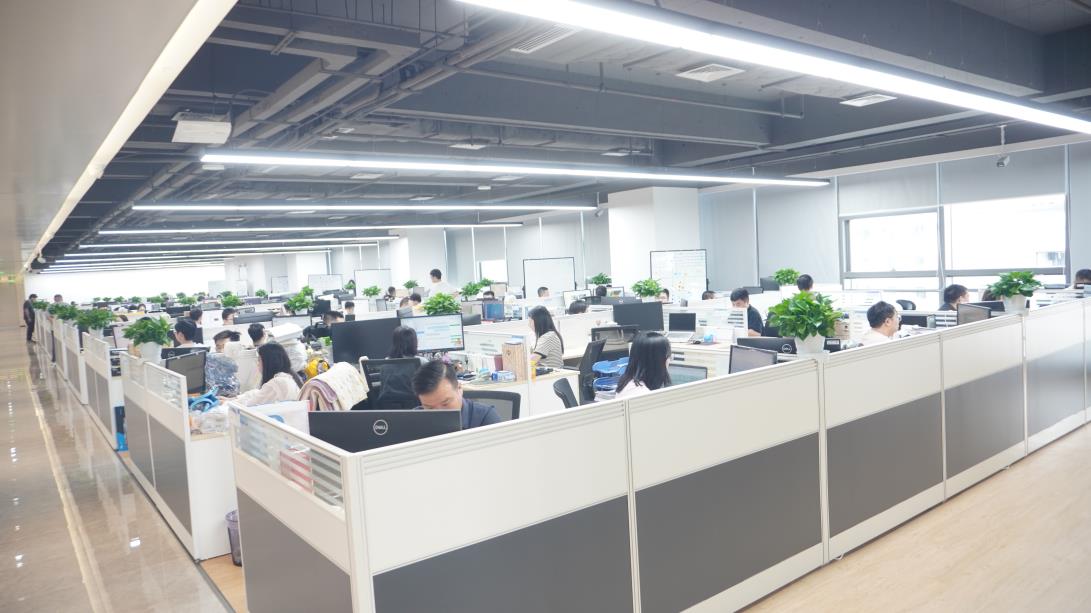
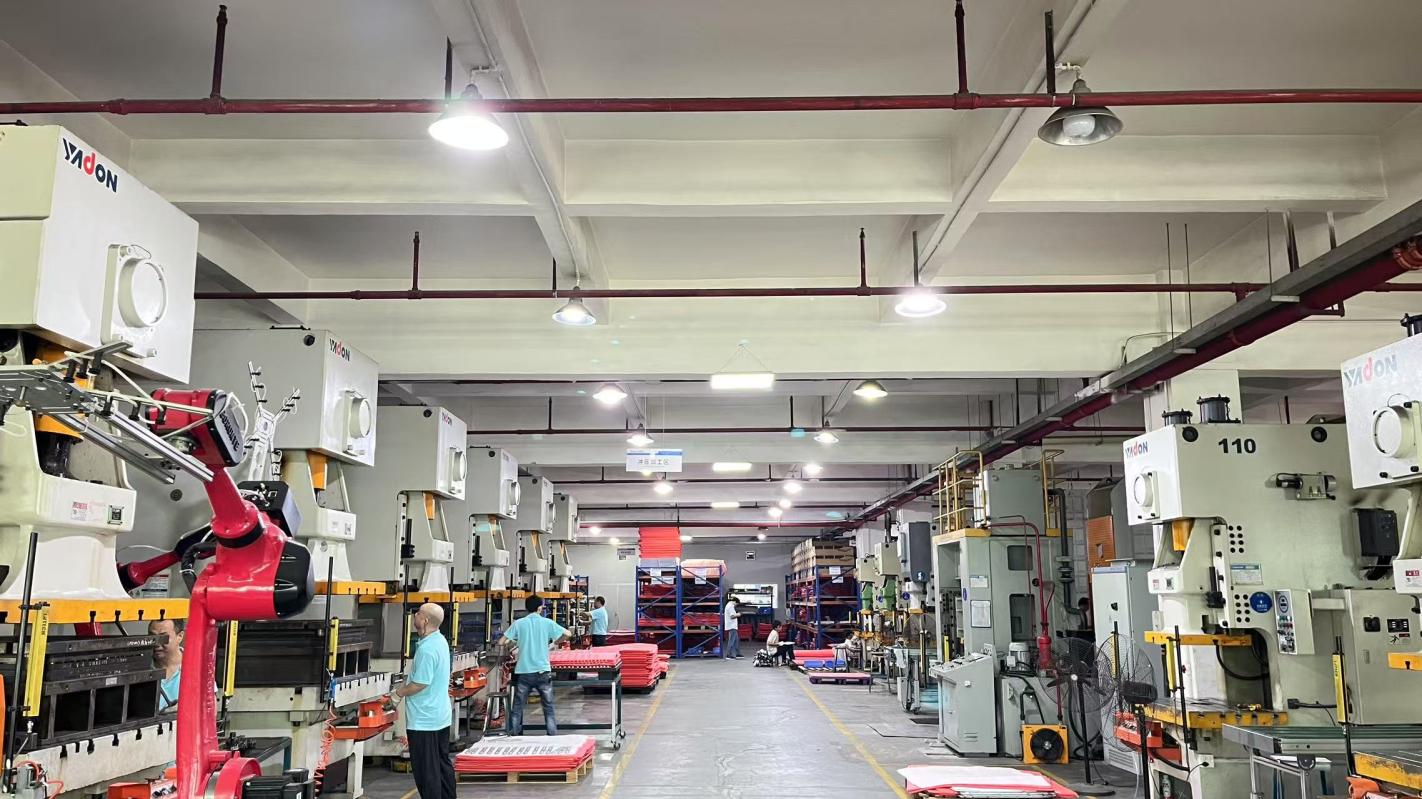


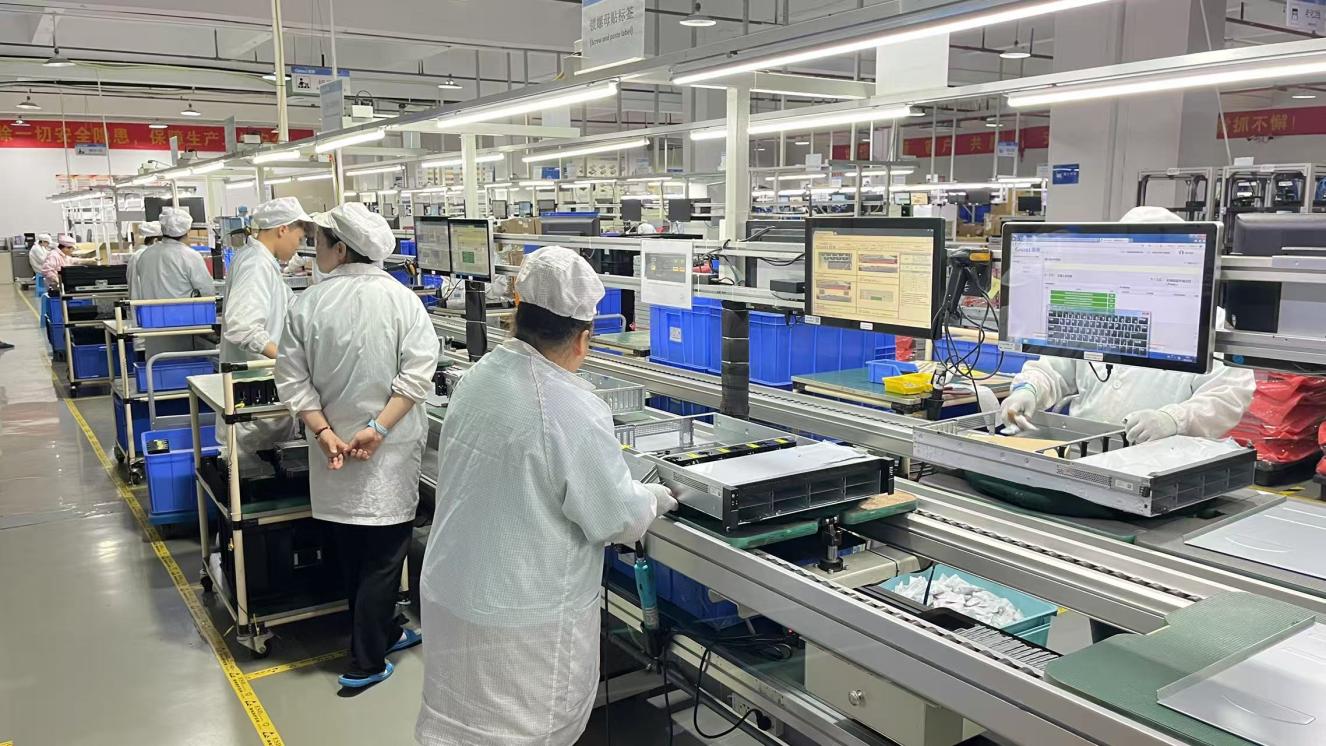
A look at a specialized high-density computing manufacturer helping scale AI deployment across global markets.

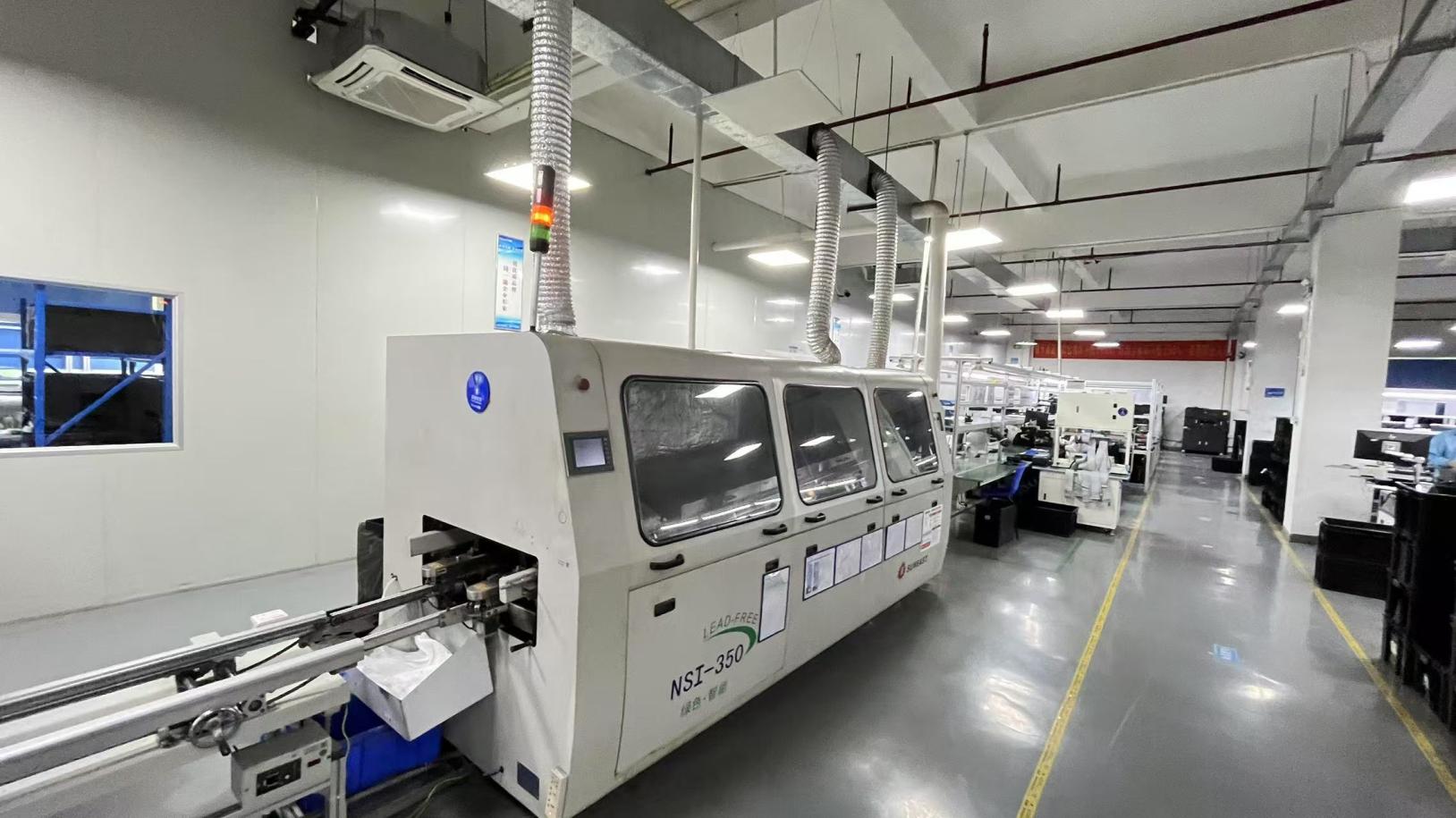
Founded in 2017, NexGPU Intelligent Computing Technology Co., Ltd. is a manufacturer specializing in GPU servers, AI computing infrastructure, high-performance computing (HPC) systems, and customized server solutions. Headquartered in Shenzhen, China, the company operates a modern facility covering over 380 square meters, equipped with assembly, testing, and quality control systems.
With more than 9 years of industry experience and 7 years of export experience, NexGPU has established itself as a supplier for enterprises, cloud service providers, research institutions, AI startups, data centers, and system integrators worldwide. Our annual export revenue exceeds USD 18 million, serving customers across North America, Europe, Southeast Asia, the Middle East, and Oceania.
NexGPU maintains strict quality management standards throughout the production process. Every product undergoes reliability testing, performance verification, burn-in testing, compatibility validation, and final inspection before shipment. Our dedicated quality control team consists of over 45 experienced inspectors, ensuring consistent product quality and reliability.
Supported by a global supply chain network of more than 1,200 strategic partners, NexGPU can source components and deliver manufacturing solutions to meet diverse customer requirements. We offer extensive OEM and ODM services, including hardware configuration customization, chassis branding, firmware optimization, rack integration, and AI infrastructure deployment solutions.
Innovation is central to our business. Our R&D department includes over 120 engineers specializing in server architecture, thermal management, AI computing optimization, and system integration. Each year, NexGPU launches more than 80 new products and solution upgrades to address the demands of artificial intelligence, machine learning, cloud computing, and enterprise data processing.
An objective industry reference mapping the key performance attributes of leading global hardware providers.
| Supplier Name | Primary Specialties | Global Regions Served | Customization Capability | Tier Classification |
|---|---|---|---|---|
| Supermicro | Green Computing, Multi-Node Blade Servers, Liquid Cooling | Global coverage, massive localized hubs | High (Mid-to-Large scale enterprise) | Tier 1 Leader |
| Dell Technologies | PowerEdge Architecture, Global Onsite Support, Enterprise SAN | Global presence, robust localized dealer networks | Moderate (Config-to-order) | Tier 1 Leader |
| NexGPU Technology | AI GPU Server Customization, OEM/ODM, High-Density Nodes | North America, Europe, Southeast Asia, Middle East | Very High (Bespoke hardware, BIOS & BMC) | AI Specialist |
| HPE (Hewlett Packard Enterprise) | ProLiant Solutions, Synergy Composability, GreenLake SaaS | Global reach with enterprise managed services | Moderate (Standard options) | Tier 1 Leader |
| Inspur Electronic Information | AI Supercomputing Platforms, Hyperscale Data Centers | APAC, EMEA, Americas | High (Hyperscale optimization) | Tier 1 Leader |
| xFusion | FusionServer Series, High-density compute racks, HCI systems | APAC, Latin America, EMEA | High (Flexible ODM models) | Enterprise Specialist |
| Lenovo ISG | ThinkSystem Racks, Neptune Liquid Cooling Solutions | Global distribution channels | Moderate (Configurator-based) | Tier 1 Leader |
| ASUS IoT & Servers | GPU-optimized barebone systems, high-density edge boxes | Americas, APAC, Europe | High (Board-level modifications) | Hardware Specialist |
| Gigabyte Technology | ARM & x86 GPU systems, high-density storage platforms | Global distribution network | High (Developer & Research-oriented) | Hardware Specialist |
| Wiwynn | ODMs for Open Compute Project (OCP), cloud hardware | Hyperscaler accounts (US & APAC) | Very High (Client-specific design) | Hyperscale Leader |
Deploying high-density systems requires tailoring the hardware architecture to specific workload characteristics.
Large language models require high-speed inter-GPU links to prevent communication bottlenecks. Combining x86 processing cores with multiple GPU cards in a compact rack unit minimizes network transit delays, making it ideal for on-premise AI training operations.
High-density SSD storage systems and dual-socket rack configurations help Content Delivery Networks handle spikes in request volume. These dense physical servers optimize space usage, reducing cost per rack in co-located facilities.
Research labs running structural mechanics simulations, climate modeling, and genomic sequencing rely on high-density node clusters. These setups deliver high floating-point operations per second (FLOPS) within restricted footprint limits.
Direct answers to critical questions commonly raised by database administrators and system architects.
Direct liquid cooling (DLC) uses high thermal conductivity liquids routed directly over the hottest system components (CPUs/GPUs). This approach reduces cooling energy requirements compared to air conditioning systems, lowering facility PUE (Power Usage Effectiveness) and supporting higher power draws per rack.
TCO calculations should balance initial acquisition costs (CAPEX) with long-term operating costs (OPEX). Key indicators include average server power efficiency under load, the cost of cooling systems, manufacturer warranties, software licensing fees, and projected hardware lifespan before retirement.
Custom BIOS settings allow administrators to optimize power usage profiles, adjust PCIe bus configurations, and tweak memory sub-timings for specific application workloads. Customized Baseboard Management Controller (BMC) firmware helps integrate servers into existing enterprise monitoring and remote management frameworks.
Shenzhen's density of electronics components suppliers, prototyping shops, and testing labs allows designers to quickly iterate on designs. This ecosystem enables faster lead times for custom chassis fabrication, PCB layout changes, and component sourcing compared to other manufacturing regions.
Complete your deployment architecture with reliable storage drives, hyperconverged server configurations, and array controllers.